
This last year I have been devouring books on the ocean. They’ve provided inspiration, fresh perspectives, and a very welcome distraction on my long commute on packed tubes…
I thought I knew a fair bit to start with, having worked on marine conservation issues and dived extensively, but time and time again my mind has been blown!
Here are snapshots of the books I’ve particularly enjoyed (in alphabetical order). Please let me know if you have other recommendations.
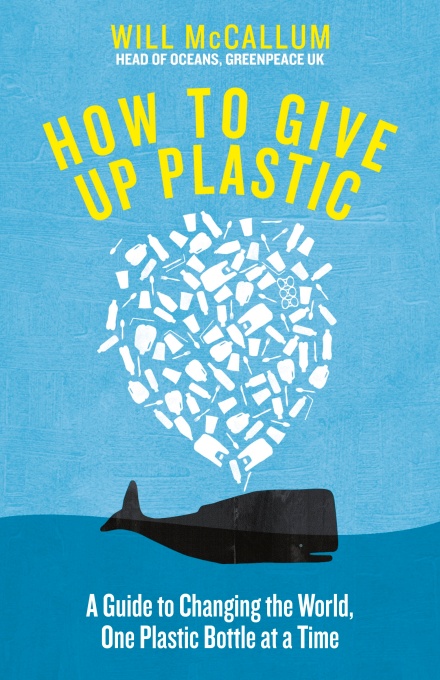
Will McCallum. Penguin Life, 2018
Will has loads of practical advice for those of us who get easily overwhelmed by the scale of the ‘plastic problem’ in our lives, our shops, our homes and in our environment. What’s even better is he presents it all in a proactive, positive, non-judgemental way. If you forget your reusable coffee cup one day, you can drink at the counter like an Italian, or think of how many cups you saved on other days by actively making a habit of carrying one with you? If you want to do more, he suggests innovative companies you can support and ways to engage your MP or encourage your local café to take action. Will wrote and toured this book following a trip to the Antarctic last year, WHILE leading Greenpeace’s Oceans Team through several ambitious campaigns… no sweat!
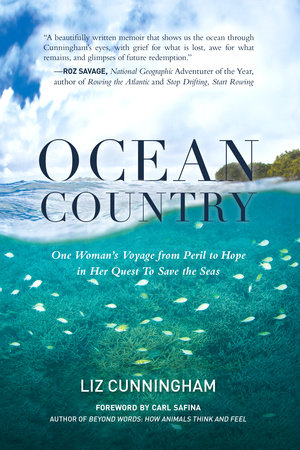
Ocean Country: One Woman’s Voyage from Peril to Hope in Her Quest to Save the Seas
Liz Cunningham. Penguin Random House, 2015
This book was a thoughtful birthday present from my wonderful friend Xavi and is now being enjoyed by my dive buddy Aimee.
Working in conservation science, we talk about biodiversity loss and the damage humans cause to ocean ecosystems so often that the emotion and fear tend to get separated from the day to day. Liz refuses to disconnect her heart and her mind and the result is a beautiful and very personal journey as she discovers ways to live and work despite the horrible threats of coral bleaching and extinctions hanging over her. In amongst this she weaves stories of innovation, collaboration and devotion to our seas from the Californian coast, Caribbean, Coral Triangle and Mediterranean.
Ocean of Life: How Our Seas are Changing
Callum Roberts. Penguin Books, 2013
Authors are often as intriguing as the words they hide behind – in Callum’s case because he is one of very few scientists who can successfully write high quality academic articles as well as engaging material for the general public. He must also be a human sponge given the depth and breadth of fascinating information included in this book (one of several he’s written on the ocean). He takes the reader time travelling, back to the birth of all life through to the alarming fate of the global ocean if we don’t get warming seas, ocean acidification, overfishing and plastic pollution under control ASAP.
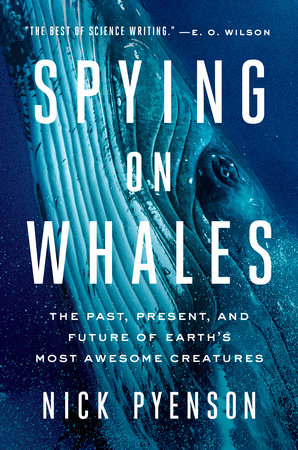
Spying on Whales: The Past, Present, and Future of Earth’s Most Awesome Creatures
Nick Pyenson. Penguin Random House, 2018
Ask a silly question and Nick has the answer. How does a scientist find themselves documenting scores of ancient whale carcasses on the side of a busy Chilean highway with a home-made laser scanning system? How does a blue whale close it’s gargantuan mouth when lunging at a school of krill, with all the downward forces at work on it’s lower jaw? Why would researchers stand on the end of a tiny boat trying to attach a suction cap on a whale’s back when one flick of a tail would flip the boat instantly? What are the ethical conundrums of hitching a ride on Icelandic whaling vessels in order to discover a previously unknown organ in a whales’ chin? Best if you read the book yourself to find out.
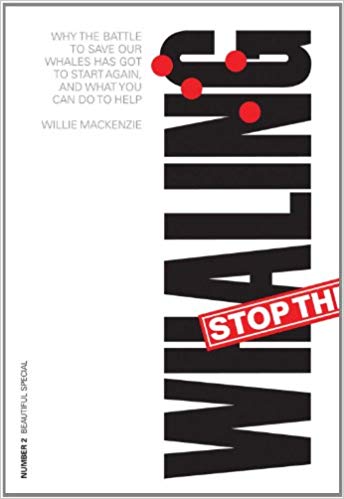
Willie Mackenzie. Beautiful Books Limited, 2008
Identifying whales at a distance of several hundred metres is not an easy business. Willie explains how to tell a species by the shape of its spout, to understand the relationship between Odontoceti (toothed whales) and Mysticeti (baleen whales), and which species were favoured by whalers because of their oil content… Even in 2019 whaling continues and many parts of the world are still recovering from the devastating effects of large scale whaling over the past two centuries. So if you can get your hands on this book, do.
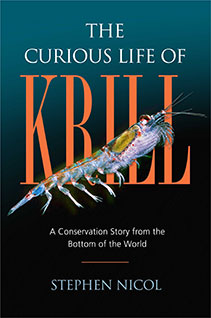
The Curious Life of Krill: A Conservation Story from the Bottom of the World
Stephen Nicol. Island Press, 2018
Thought it wasn’t possible to dedicate a whole book on these crustaceans at the base of the Antarctic food chain? Wrong! Thought they were microscopic & mindless? Wrong again! This book is as nerdy as it is fascinating, covering all that is known, and unknown about these crunchy creatures, as well as the international agreements and governance structures which dictate who gets to catch them and why they need protecting.
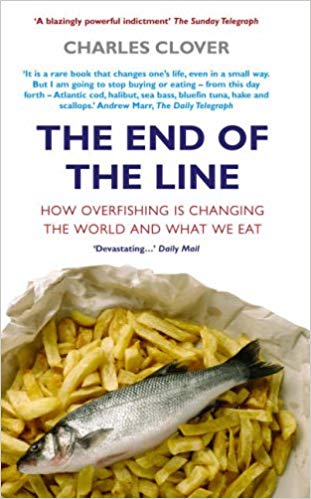
The End of the Line: How Overfishing is Changing the World and What We Eat
Charles Clover. Ebury Press, 2005
All the things you didn’t know you didn’t know about the global commercial fishing industry, captivatingly unraveled by a former journalist and now also the subject of a feature film. Charles’ frustration and passion come through in equal measure. Ever since reading this book, I’ve been preoccupied by one question in particular – why is it that we know exactly where most of our food comes from, often down to the exact farm, yet we rarely have any idea about what species of fish we are eating, let alone which part of the world it was caught, and whether it was caught legally?
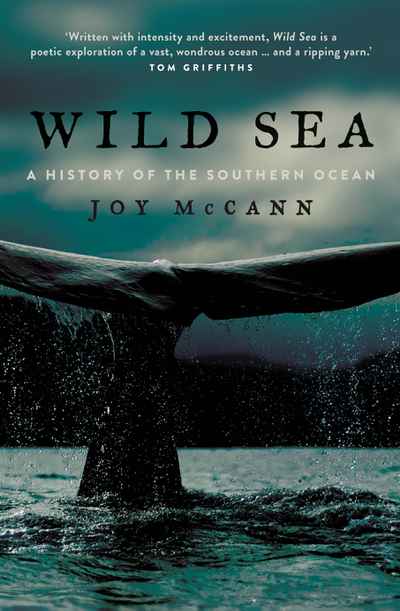
Wild Sea: A History of the Southern Ocean
Joy McCann. New South Books, 2018
I always seem to stagger out of the NSW State Library shop with my arms full. I was especially pleased to find this one fresh off the press last year. Joy is a historian at ANU and presents a part of the world often forgotten on maps, in text books and in regional histories. I learnt that it wasn’t just whales that copped a battering in the Southern Ocean. Macquarie Island, a remote sub-Antarctic outpost where my friend Emily recently spent months on cliffs surveying seabirds, was once home to desperate men who would club seals and even penguins to death for their oil. Not quite as ‘pristine’ a wildlife refuge as I had thought.
Different voices add depth
The perspectives of journalists like Liz and Charles contrast with those of researchers like Stephen, Joy, Nick and Callum, and often force us to ask uncomfortable questions about ourselves and our societies, as well as about the species and places we love. Campaigners like Will and Willie are well positioned to remind us of the urgency of action, but also how easy it can be to take the first step. All authors dedicated substantial time and energy into these books, so I hope you enjoy them as much as I did.
Fun fact
Out of this list, four of these books were written by people I have the pleasure of working with through the Great British Oceans coalition – Charles, Callum, Willie and Will (plus Amdeep, who is featured in Liz’s book as ‘the turtle-man’!). The rest of the GBO coalition are now on notice to up their game!
 Dr Emma J McIntosh
You must be logged in to post a comment.