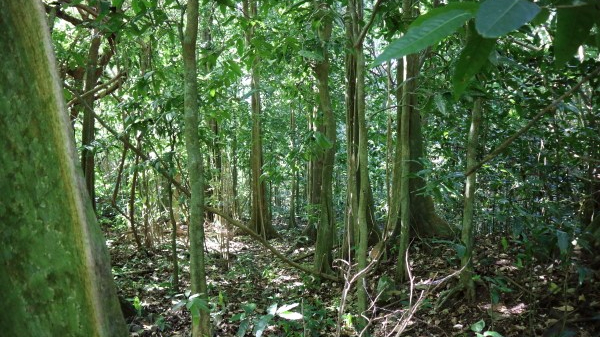
Forest monitoring in the South Pacific – Blog #2
Tropical forests play an important role in the in the global carbon cycle and in regulating our climate. If it wasn’t for tropical forests, carbon dioxide in the atmosphere would be rising by 17% higher than currently observed.
Collective research efforts in Central and South America, South East Asia and Africa have helped inform this understanding (through data sharing initiatives like ForestPlots.net). However, few studies have targeted tropical forests on small islands, which are often very different to continental forests and are more likely to be affected by factors such as sea level rise and rampant invasive species.
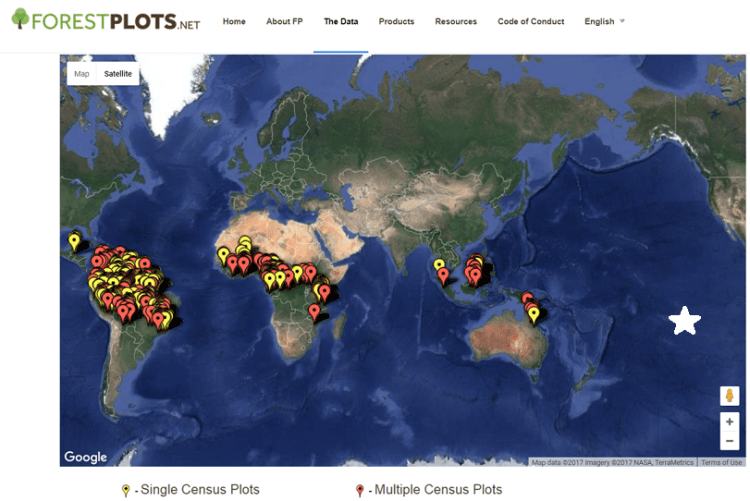
French Polynesia is made up of more than 100 islands sprinkled across the South Pacific. My Tahitian colleague Heipoe Tihopu and I will be monitoring forests on the island of Moorea and a nearby atoll, Tetiaroa, both part of the Society Islands archipelago (to which the most populous island, Tahiti, also belongs).
After exploring Moorea’s lagoon and coast (see my first post in this series), buying the island’s entire stock of small PVC pipes(!), and visiting potential monitoring sites in the Opunohu Valley, we were ready for our project launch meeting with our partners.
Before starting any fieldwork, we needed to better understand the current research priorities and existing projects on both islands. Neil Davies, Director of Gump Station on Moorea, and Frank Murphy, Executive Director of the Tetiaroa Society, contributed their in-depth knowledge and aspirations, and Jean-Yves Meyer, Director of the Department of Research and an outstanding field botanist, also made sure we were aware of related activities such as recent vegetation mapping of Moorea using satellite data.
We were also joined by Miriama Tamaku, Laboratory Technician at Gump Station (who has been instrumental in assisting us to cut PVC pipes for site markers, and to drill holes in thousands of tree tags), Rosanna Neuhausler, a PhD student at University of California, Berkeley also working on Moorea, and Chris Moyer, a visiting environmental consultant.
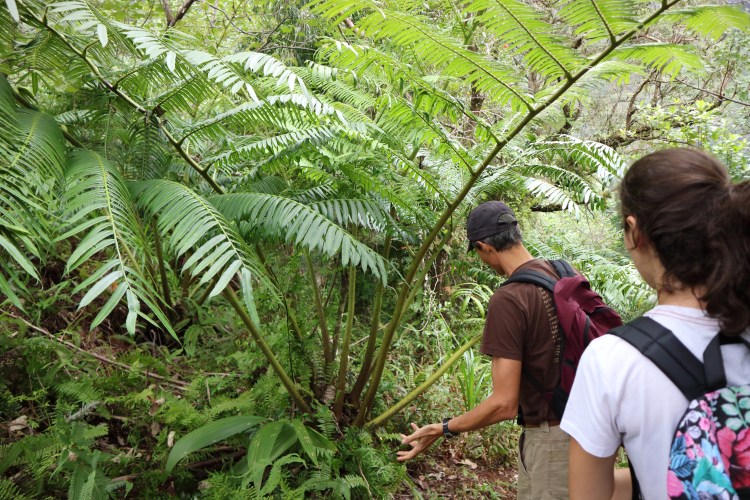
After a productive meeting, Jean-Yves, Heipoe and I headed out to Belvedere, a stunning lookout point above the two main bays on Moorea, Opunohu and Cook’s Bay, and set about botanising!
There are many fascinating research questions we’ll be pursuing on each island – such as the impacts of introduced coconut and rats on Tetiaroa’s bird populations, and the role of ‘hybrid’ habitats in Moorea’s Opunohu Valley. I’ll expand on these in future posts. However, the overarching link between the forests on these islands and forests elsewhere, is their role in carbon cycling.
By conducting baseline surveys using standardised protocols, we will be able to compare the diversity, structure and ‘standing biomass’ (put simply the amount of carbon in the trunks and branches of living trees) of these island forest communities, with other types of tropical forests around the globe.
This initial visit is merely the starting point, to establish what we hope will become long term monitoring sites. In future they could potentially be expanded to include more intensive carbon monitoring, as part of the Global Ecosystem Monitoring (GEM) network, and contribute much needed terrestrial ecological knowledge to the Moorea Island Digital Ecosystem Avatar (IDEA) project, and even become the focus for field trips and training for students at local and international institutions.
For now, Heipoe and I are off to Tetiaroa, formerly Marlon Brando’s private island, to set up the very first of our South Pacific plots. Stay posted for some incredible photos next week!
 Dr Emma J McIntosh
We’re looking forward to following your progress. Such important and interesting research!
-Emma