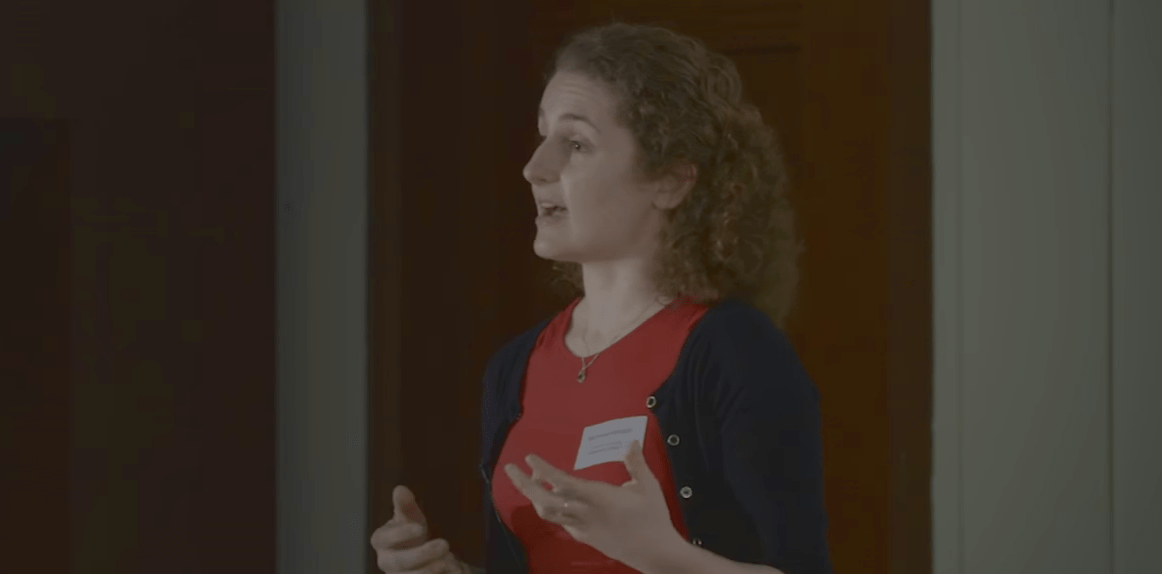
Today I woke up to an email alert announcing that I am now on YouTube, standing there delivering a talk on conservation planning for all the world to see (well, my friends and relatives anyway!) The adrenaline hit me immediately. A mixture of ‘Ahh!!!’ and, ‘I hope I didn’t stuff up’, and ‘What will people think of my work?’
After rushing to open the link and ‘check it’ before anyone else did, I realised it wasn’t so bad after all. It’s just me, talking to a room of people about conservation issues that I’m passionate about. And that made me feel good. It won’t get the viewing rates of David Attenborough’s clips, but my thoughts are now out there for interested people to engage with. (It also helped that Daniel and Tim from Verso Films did a great job of filming and editing the talk!)
I didn’t initially jump into this very public performance idea, to some extent I was pushed by my scholarship organisation, the General Sir John Monash Foundation. They arranged a conference for Europe-based John Monash scholars entitled ‘The Change Agenda: Leadership and Direction for Australia’s Future‘ and asked us all to speak about our work (the YouTube twist came later!).
We were all excited about the opportunity to meet each other and hear about the wide range of topics we cover, from quantum computing to refugee resettlement, LGBTQIA literature to high cost credit schemes, and the presentations were truly incredible and inspiring (you can watch them all via the Foundation’s YouTube channel).
So I’m really glad we were pushed by Judith and the Foundation to give this a go. Standing up in front of a general audience and explaining what inspires us about our research opens up all sorts of fascinating conversations with people we might not usually talk to about our work.
After every presentation the room was abuzz with questions about the broader policy relevance, the transformative opportunities of new technologies and the recognition of a surprisingly high amount of cross over between seemingly disparate topics and challenges.
Ultimately, it was fun! Not only at the time and immediately afterwards when we all got to talk about our ideas, but also now, even when I’m doing the awkward self promotion bit…
Why? I can send that YouTube link to my Grandma who has just started using an iPad for the first time, to my friends in Australia who are getting ready for bed as I wake up, to my supervisor who sparked and helped develop some of these ideas, and to a range of other people I may have never met but who might want to start a conversation, or might just go away thinking differently about biodiversity conservation.
For more conservation science stories getting ‘out there’, check out this work by my fellow PhD student John Mittermeier on using Wikipedia data to capture the cultural value of reptiles (dragon-like features seem to determine our top ten favourite scaly species!).
Applications are now open for the next round of General Sir John Monash Scholarships, so get yours in by 1 August 2016!
 Dr Emma J McIntosh