I was recently fortunate enough to visit Julia Jones and her research group at Bangor University in North Wales. This was the second of what is hoped to be many visits and connections between the Grenyer Lab at Oxford and the Conservation@Bangor group and was a fascinating exchange of ideas and cultures.
My visit was initially prompted by shared interests in the human dimensions of biodiversity conservation and my desire to learn more about what the social science approaches members of Conservation@Bangor are mastering. However the incredibly warm welcome and stunning scenery I was greeted with will be my excuse to try to visit again soon!
Conservation challenges are inevitably multidimensional and the Bangor team are using mixed methods to explore the practical realities of combining conservation and development, as well as many other conservation conflicts and management dilemmas. Neal Hockley and Patrick Rafidimanantsoa are exploring the reasons why decision makers choose to consider some evidence sources and not others, on the Welsh Coast and forests of Madagascar respectively. PhD students Sarobidy Rakotonarivo, Josil Murray, Amy (Spike) Lewis are using a wide range of approaches to explore the costs of conservation, effectiveness of REDD+ (reduced deforestation initiatives) and the rationales behind communities in developing countries choosing whether or not to adopt and support conservation actions. Their field trip stories were fantastic (and seriously hard core)!
I got to play the role of an investigative journalist, meeting up with lots of researchers to talk about their projects and road test my own research plans. Mahesh Poudyal introduced me to the social science methods ‘bible’; Bryman’s Social Science Research Methods and Julia shared a couple of extremely valuable papers, particularly ‘The importance of stupidity in scientific research’ (which I found very comforting as a newbie to the social sciences!) and one of hers on how ‘Robust study design is as important on the social as it is on the ecological side of applied ecological research’.
No visitor to Bangor escapes without giving a presentation. Matt Hayward opened the weekly presentation session with stunning photos from his work with large predators in South Africa and the boom and bust cycles of growth and drought in the desert landscape of Kalamurina, Central Australia. I presented my overarching research questions on evaluating the effectiveness of conservation planning processes and my experiences to date on a planning case study in the New Forest, southern England. It was great to receive positive feedback and confirmation my research is going to be of interest to a wider audience, as well as suggestions about selecting stakeholders and structuring interview questions.
As a bonus, Andrew Pullin and I were able to discuss a systematic map protocol I am currently drafting on evidence for the outcomes of systematic conservation planning initiatives. Systematic maps provide a rigorous way of collating and categorising all available evidence relevant to a policy-relevant question. This is desperately needed for the discipline of systematic conservation planning, as it is a widely used approach to prioritise conservation actions, but the range of potential outcomes are still poorly understood.
Work life balance is an important part of Bangor life and on my final night we celebrated the handing in of a thesis and the arrival of new students from Madagascar with a hot pot night at Julia and Neal’s – fantastic Malay, Malagasy and Nepalese foods left all of us feeling very satisfied! It was a great way to meet the entire research group and to hear about their exotic field trips, wide ranging research and share stories of conducting research in foreign languages.
No trip to Wales is complete without a hike up Snowdon (Yr Wyddfa), so once that job was complete over the weekend, I headed home thoroughly satisfied and keen to visit again soon. Many thanks to everyone from Conservation@Bangor for making it such a wonderful trip!
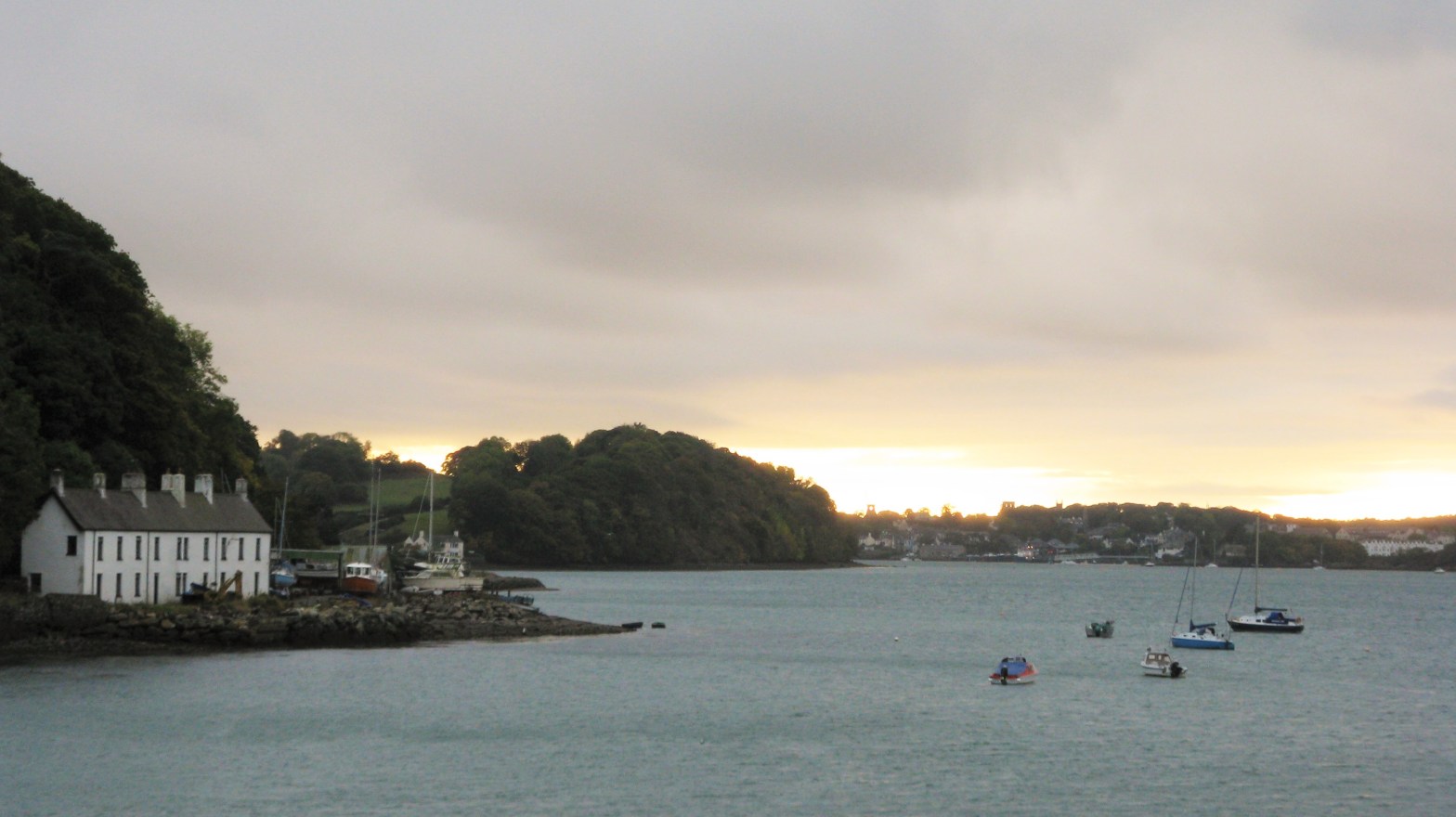
Photo: Beautiful Bangor harbour at sunset, taken from the famous pier. Credit: Emma McIntosh
 Dr Emma J McIntosh